









Dear President Trump, You Are Mistaken
May 25, 2026, 10:37 p.m.
By Jyh-huei Kuo
US President Donald Trump recently repeated his claim that “Taiwan stole America’s chip industry,” reigniting public debate on the issue.
As a former Taiwanese minister of economic affairs and an entrepreneur deeply involved in semiconductor supply chain development, I feel a responsibility to clarify this misunderstanding.
From the perspective of global industrial evolution and the economic principle of comparative advantage, such a statement appears overly simplistic and risks obscuring the essence of the issue.
The rise of Taiwan’s semiconductor industry was not built on “replacing America,” but rather emerged as a result of countries pursuing different development paths within the framework of global industrial specialization.
According to international economic theory, no country can maintain a competitive edge in every sector.
Instead, nations allocate resources toward industries where they possess the greatest efficiency and strategic advantages. This is precisely the fundamental concept of comparative advantage.
Over the past several decades, the US has consistently played the role of a global leader in technological innovation.
From semiconductor science and electronic design automation design tools to core intellectual property, chip architectures, system design and software ecosystems, the US has firmly controlled the most critical upstream segments of the technology value chain.
The strategy of US companies has long been clear: Concentrate resources on research and development, innovation and brand value, while gradually outsourcing manufacturing — which requires substantial capital investment and labor intensity — to emerging economies and regions. This was not a forced retreat; it was a strategic decision based on comparative advantage.
Recognizing Asia’s strengths in manufacturing costs, labor resources and operational efficiency, US firms helped shape an international division-of-labor model.
Within this framework, Taiwan, Japan, South Korea and later China each assumed important manufacturing roles across different segments of the technology industry.
Taiwan did not acquire semiconductor capabilities out of thin air.
During the 1970s, Taiwan introduced technology from the now-defunct American RCA Corp through Taiwan’s Industrial Technology Research Institute, establishing its technological foundation.
Over the following decades, Taiwan invested heavily in talent cultivation, process optimization, supply chain integration and industrial cluster development, gradually building the competitive position it holds today.
The key factor was not simply acquiring technology; it was continuous improvement.
Semiconductor manufacturing is not merely a matter of following a circuit blueprint and producing chips accordingly.
It is an industry that demands extraordinary discipline, precision management and sustained long-term investment. A one-percentage-point improvement in yield rates, or a one-generation lead in process technology, can create enormous competitive advantages.
There are no shortcuts in this industry, and it is inaccurate to summarize such a complex process with the word “steal.”
The US did not lose the semiconductor industry; rather, it redefined its role within it.
Even today, many of the world’s most critical technologies — including chip design, operating systems, artificial intelligenc (AI) architectures, semiconductor equipment and advanced materials — remain largely under US leadership. US companies continue to occupy the commanding heights of the global technology value chain.
In recent years, geopolitical shifts and supply chain disruptions during the COVID-19 pandemic prompted the US to reconsider an important question: Has the relentless pursuit of efficiency weakened manufacturing resilience and potentially threatened national security?
This has led to active industrial policies encouraging manufacturing reshoring. The purpose is not to reject globalization or international specialization, but rather to rebalance the relationship between efficiency and security.
Therefore, Taiwan’s achievements in semiconductors should not be mischaracterized as having “replaced” or “taken away” someone else’s industry.
What should be emphasized instead is that Taiwan, through decades of investment, professional capability and industrial resilience, has established a position that is difficult to replicate.
Industry is not a zero-sum game.
Taiwan’s success does not imply another country’s failure. More accurately, the US chose innovation, while Taiwan chose manufacturing; the US created technological value, while Taiwan realized technological value.
Together, Taiwan and the US built one of the most successful collaborative models in the history of the global technology industry.
The challenge today is not to revisit arguments about who once owned which industry. The more important question is: Who has the ability to shape the future, define the rules and lead the next wave of global industrial transformation?
The semiconductor industry has already demonstrated the power of complementary strengths.
With continued collaboration, Taiwan and the US can together create the next era of technological prosperity.
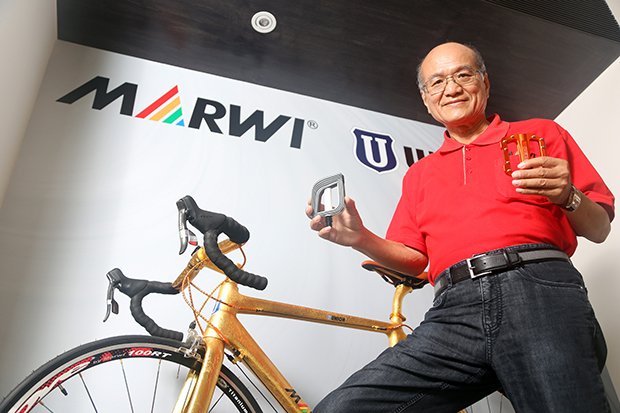
Jyh-huei Kuo is a former minister of economic affairs and the founder of TOPCO Group.




- 華航再添新航點!歐陸深度之旅創新意 展開布拉格進維也納出的奇幻旅程
- 誰說出了國就有國際觀?臺灣人在捷克開旅行社,拒絕讓旅客「走馬看花」
- 布拉格散散步~用10克朗悠遊捷克科學院圖書館,在玻璃帷幕灑落的日光殿堂中看書吹冷氣!
- 遊布拉格如沉浸整座世界遺產城市 交通票券親民
- 華航開航布拉格!帶動當地旅遊業績成長破6成 退稅規則看這裡 | 壹蘋新聞網 | LINE TODAY
- 台捷首航順利抵達 布拉格灑水歡迎、正副議長迎接台客
- 布拉格也有交通套票 3種大眾運輸無限搭
- 今夜華航台北-布拉格首航 滿載旅客造訪童話王國
- 華航開航直飛捷克布拉格! 轉機較以往省5小時
- 華航直飛布拉格! 首航旅客享用米其林三星美食
- 華航首航布拉格 訂位滿到8月
- 捷克訪團成契機! 華航首航布拉格6大航點全直飛
- 華航布拉格直飛航線 7月首發

- 鴻海宣布與ElectroMobility Poland達成策略夥伴關係 雙方共同推動電動車產業生態系
- 台灣捐贈68輛救護救災車抵烏克蘭 深化人道合作
- 匈牙利變天總理奧班承認敗選 歐洲國家反應一次看
- 捷克與台灣簽署備忘錄 合作援助烏克蘭重建
- Lilith(莉莉斯/莉莉特)雕像,布拉格熱門新地標,捷克前衛藝術家大衛·切爾尼(David Černý)最新作品
- 國合會攜手捷克NGO 助土耳其災後重建
- 捷克退稅3關鍵必拍 沒做1動作就失敗
- 4萬5000年前古人相貌重建 捷克「金馬」女士面容曝光
- 捷克,這真是太神奇了(四)跟旅行團遊「世界文化遺產」是好還是壞?|換日線 Crossing
- 汰「俄」了!捷克接收首批美製AH-1Z攻擊直升機
- 歐洲物價這裡最親民!捷克成遊學黑馬| 產經
- 中華電攜手波蘭電信公司 簽台波網路服務合約
- 布拉格觀光熱度增今年四月增長最多旅客為台灣
- 捷克,這真是太神奇了(三)街道市容不合格的臺灣,如何向布拉格學習?|換日線 Crossing
- 龔明鑫搭台北布拉格直航抵捷克 艾達莫娃接待
- 台捷交流日趨熱絡 國家圖書館古籍布拉格展出
- 捷克飯店住房率首度達到疫情前水準
- 以《生命中不可承受之輕》傳世 捷克作家米蘭昆德拉94歲辭世
- 台灣之光!伯朗咖啡紅透中東 捷克市占率過半 約旦第一品牌
- 天鵝狂嗑罌粟花嗨到飛不動 農夫損失數十萬
- 布拉格動物園證實來自台灣的穿山甲懷孕,若順利生產將首開歐洲繁殖紀錄
- 捷克人權影展One World起跑 「九槍」獲邀參展